Premium —
Premium Pincab: What Actually Makes the Difference
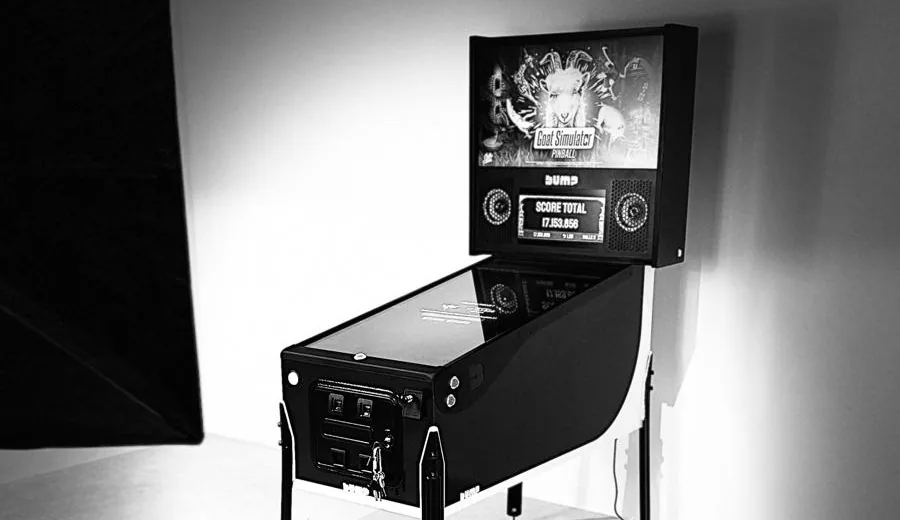
A pincab (short for "pinball cabinet") is a digital pinball: a cabinet that keeps the shape of a classic pinball machine, but where the physical playfield is replaced by one or several screens that simulate the game through software such as Visual Pinball or Pinball FX. A single machine gives access to dozens, sometimes more than 100 different tables, with no mechanical part to maintain. A high-end pincab stands out through the quality of the display (OLED 4K rather than LCD), computing power (a recent RTX-class graphics card), build quality and the catalog of licensed tables — this is the tier covered in this article.
The real test of a premium pincab isn't on a spec sheet. It's at first glance, when the screen gives depth to the table. At the first flip, when the response feels instant. And especially after several games, when the machine remains desirable as a beautiful object — not just another device in a game room.
The pincab market has long been dominated by a DIY mentality — constant configuration, technical trade-offs, and endless tinkering. For some enthusiasts, that's part of the fun. For others, especially when the budget is high, it's not the point. They want a ready-to-play digital pinball with no technical compromise, capable of delivering a premium experience from the moment it powers on. That's where true premium positioning begins.
A premium pincab doesn't sell parts — it sells a sensation
You can always line up prestigious components. But in digital pinball, perceived quality comes first from how everything works together. A 4K OLED panel, for example, only has value if it serves the game — deep blacks, sharp contrast, perfect readability, convincing light effects, a sense of depth on the table. A powerful graphics card doesn't impress by its name. It matters because it guarantees fluidity, visual stability and consistency of the experience.
That's the difference between a machine that displays tables and one that makes you want to play again. In a premium universe, the user isn't just buying a catalogue. They're buying a presence, a level of finish, and a pleasure of use that justifies the space taken in a living room, a dedicated room, or a private reception area.
This distinction is essential because the pincab sits at the crossroads of three worlds. It's a gaming object, a technology object, and a design object. If any of the three is neglected, the premium promise collapses quickly.
What you notice right away
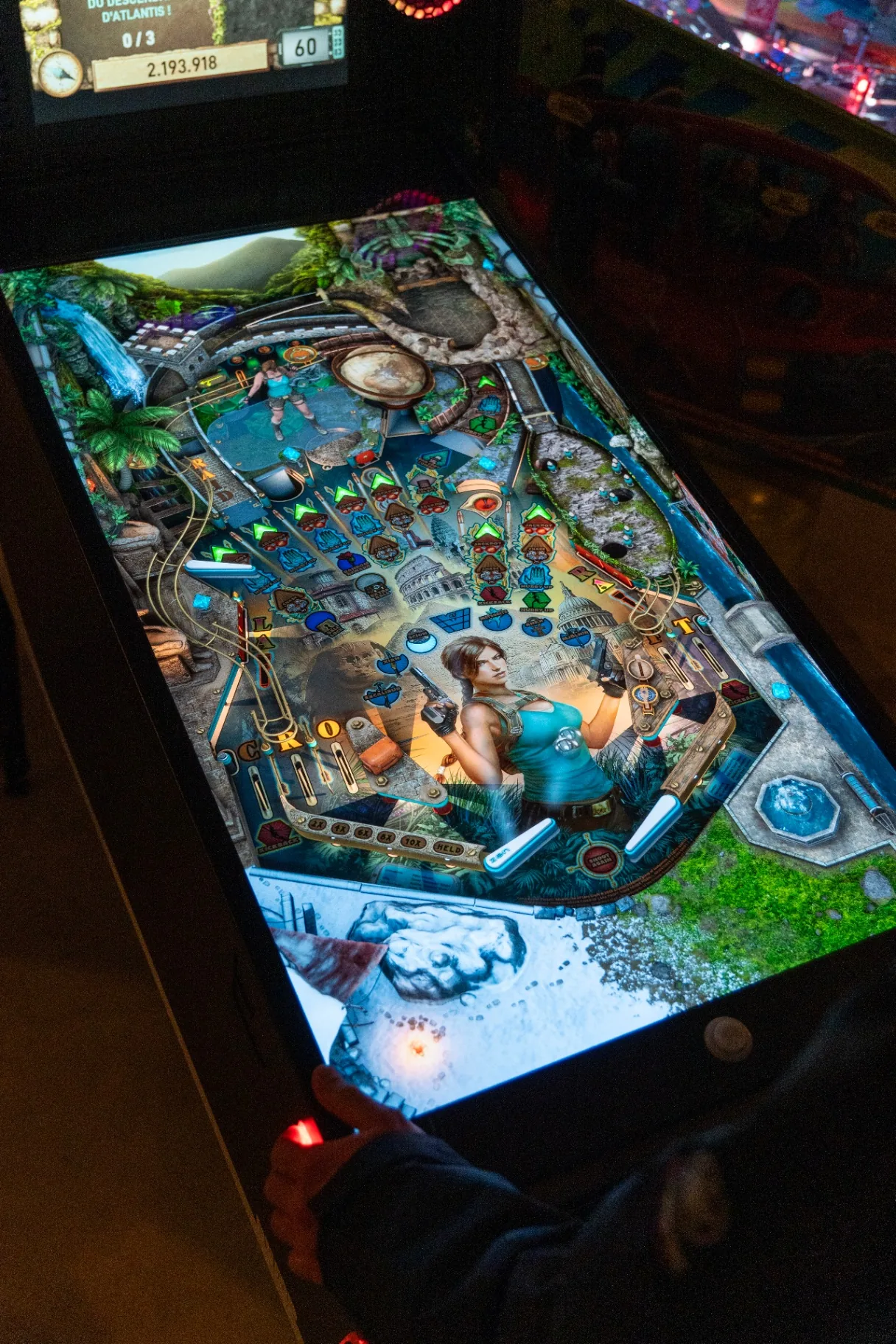
Image quality comes first. On a premium digital pinball, the main screen isn't just a display surface. It's the playing field. When the image lacks depth, when reflections interfere, when colours bleed or blacks turn grey, the illusion falls apart. Conversely, a beautiful panel immediately transforms the ball tracking, the perception of inserts, and the graphic richness of the tables.
Then comes fluidity. This is a point often underestimated by those who haven't played on well-tuned machines. Pinball is a game of timing, angles, and anticipation. The slightest gap between what the eye perceives and what the hands trigger degrades the pleasure. A premium machine is recognised by this sense of precision. Nothing drags the experience down. Everything feels sharp, stable and reactive.
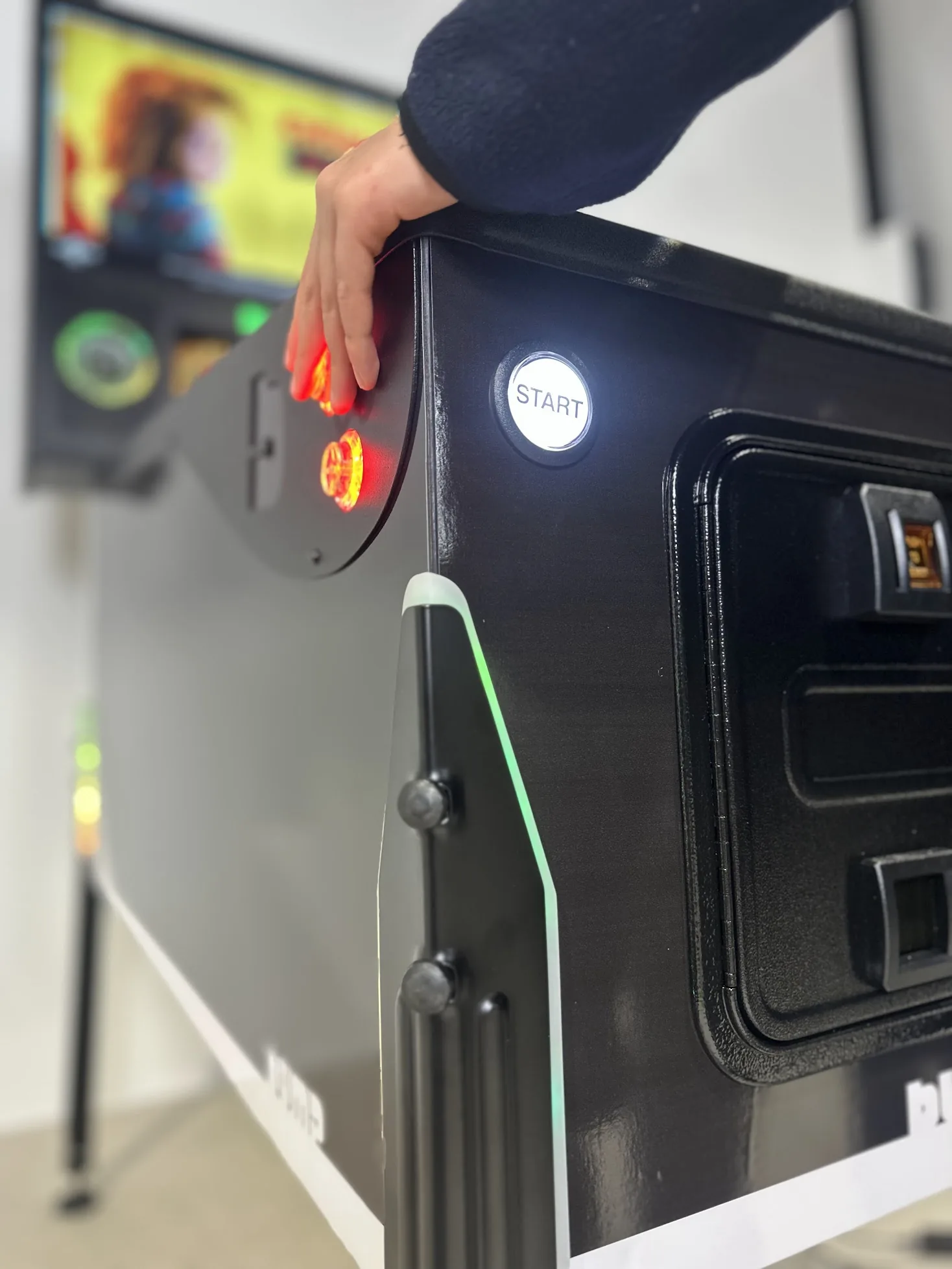
Build quality matters just as much. A beautiful pincab shouldn't only perform at delivery. It should inspire confidence. Clean adjustments, convincing materials, balanced lines, well-integrated controls, careful finishes — these are the details that tip it into premium territory. In this world, the hand sees almost as much as the eye.
The spec sheet matters, but only if it serves the experience
Let's be clear — yes, components matter. An LG C5 4K OLED panel, an RTX 5070, a library of 140 tables available — these aren't decorative arguments. They're concrete markers of level. But a demanding customer isn't looking to collect references on a brochure. They're looking to understand what they actually change in real life.
They first change the quality of rendering. Lighting effects are more believable, contrasts deeper, animations cleaner. They then change the perceived longevity of the product. A machine built with top-tier components inspires a more serene relationship with the purchase. You don't start wondering from day one what will need replacing, optimising or fixing.
This is also a point that strongly distinguishes the premium segment from the more artisanal or DIY market. In a very custom approach, the user often agrees to also become integrator, tester, and technician. That can appeal to profiles who enjoy adjusting, modifying, experimenting. But it's not the same promise. A ready-to-play premium pincab aims for a different kind of excellence — less friction, more mastery, more time spent playing than configuring.
Premium also means clarity
In this sector, many buyers proceed with real caution. And rightly so. Between machines with vague components, opaque pricing, software whose commercial use is sometimes questionable, and builds that shift from one quote to the next, it's hard to compare calmly.
Premium also starts there — in the readability of the offer. When a brand clearly owns its component level, its positioning, its build quality and its promise of use, it sends a strong signal. It tells the customer they're not buying a puzzle. They're buying a vision of the product.
This is precisely what makes the difference in a still very heterogeneous market. A premium machine doesn't need to hide behind technical jargon or endless customisation to justify its price. It must be able to defend that price through coherence, performance and the final result.
Why design matters as much as power
A premium pincab isn't a PC tower hidden under a desk. It's a visible piece. It dialogues with an interior, with a collection, with an aesthetic identity. In some homes, it shares space with high-end speakers, a home cinema, collector consoles, sometimes even a real mechanical pinball machine.
Good design isn't about overloading the machine. It's about giving it presence without falling into excess. Proportions, materials, surface work, assembly precision — all of this contributes to the sense of value. Quiet luxury often works better than short-term spectacle.
This is also what brings the premium digital pinball closer to a collector's item. It doesn't replace mechanical pinball — it occupies a different space. It brings versatility, immediacy, instant access to a vast gaming universe, while maintaining a strong physical presence. For many buyers, it's precisely this complementarity that makes the investment worthwhile.
Who is a premium pincab really for?
Not just pinball purists. It also speaks to simulation enthusiasts, collectors of beautiful machines, arcade culture fans, and households looking for a distinctive entertainment centrepiece. It appeals to the player seeking performance as much as the one wanting a statement piece for entertaining, sharing and passing on.
There's also an interesting generational factor. Pinball has a powerful history, but the premium pincab speaks to the present. It borrows from video games their visual language, their cultural connectivity, their ability to exist in a broader conversation than nostalgia alone. It's a machine that can speak to parents and teenagers, to collectors and younger tastemakers who quickly spot what has style and what feels dated.
In this spirit, a brand like Bump sets a very clear framework — making digital pinball a complete premium proposition, with bold technological choices, careful craftsmanship, and an experience designed to immediately be at the right level.
Before buying, the right question isn't just how much — but why
A premium pincab costs more, obviously. The real question is what you expect from the machine. If the goal is to enter the world on a tight budget, other options exist. If the goal is to own an exceptional piece — stable, beautiful, powerful and rewarding over time — the reasoning changes.
You then need to look at image quality, responsiveness, build quality, overall coherence and ease of use. You also need to think about the long term — is this a machine you'll be proud to show in one year, three years, five years? Does it retain its status as a desired object, or does it become an unfinished technical project?
Premium doesn't forgive poorly placed compromises. But when well executed, it offers something rare — a spectacular gaming experience, a real presence in the space, and that very modern feeling of owning a machine designed without unnecessary compromises.
If you're looking for a pincab that does more than emulate tables, look for the one that turns every game into a moment you want to replay — and then share.
FAQ
What is a pincab?
A pincab is a digital pinball: a cabinet that simulates the playfield on one or more screens rather than on a physical surface, using software such as Visual Pinball or Pinball FX. It lets you play dozens, even hundreds of different tables on a single machine.
What's the difference between a pincab and a mechanical pinball?
A mechanical pinball uses a real steel ball on a physical playfield; a pincab simulates that playfield on a screen. A pincab requires far less maintenance (no mechanical parts to replace) and gives access to a much wider catalog of tables, but the tactile experience differs.
What sets a high-end pincab apart from an entry-level model?
The display (OLED 4K versus standard LCD), the graphics card (recent RTX versus entry-level GPU), build quality and the access to official tables purchased separately. These items account for most of the price gap between a €3,000 pincab and a €9,000+ model.
How much does a high-end pincab cost in 2026?
Expect between €7,000 and €10,000 for a high-end configuration (OLED 4K panel, recent GPU, 100+ tables, long warranty). A full breakdown by tier is available in our 2026 digital pinball price guide.
Is a pincab meant for mechanical pinball purists?
It serves a different use: a pincab appeals to those who want broad table variety and minimal maintenance rather than the exact tactile feel of a steel ball. Many homes own both, complementing each other.
Does a pincab need regular technical maintenance?
No, unlike a mechanical pinball. A well-built high-end pincab only requires occasional software updates, with no wear parts to replace.
Discover the BUMP Pro — the premium experience, no compromise See the BUMP Pro