Comparison —
Virtual pinball machine: how it works, what it costs and how it compares with real pinball
Updated on 23 November 2026
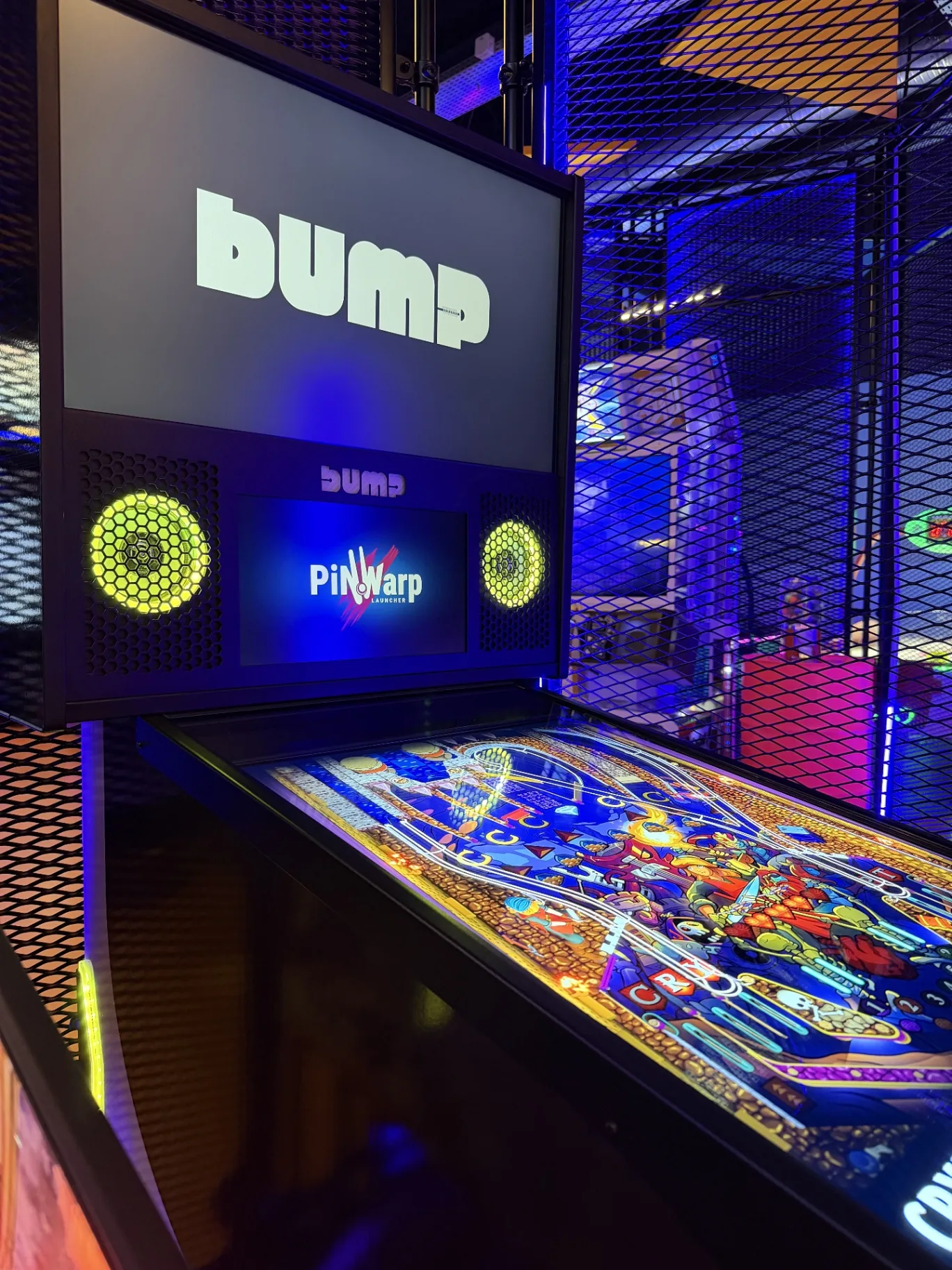
A virtual pinball machine is a pinball cabinet with its playfield displayed on a screen laid flat beneath the glass. A computer calculates the ball's path in real time. Real buttons, a real plunger and, on the best machines, a nudge sensor reproduce the player's movements. It is also called digital pinball, a pincab or a simulator. Here is how it works, how it compares with mechanical pinball and what it costs in 2026.
How a virtual pinball machine works
Three elements make the game. First, the playfield screen: laid flat, it displays the table, at 32 inches on a consumer machine or 43 inches on a full-size model such as the Bump Pro. Next, the computer: it runs the pinball software, which calculates ball physics, rebounds and each table's rules. Finally, the controls: flipper buttons, a ball plunger and a start button, just like a bar pinball machine.
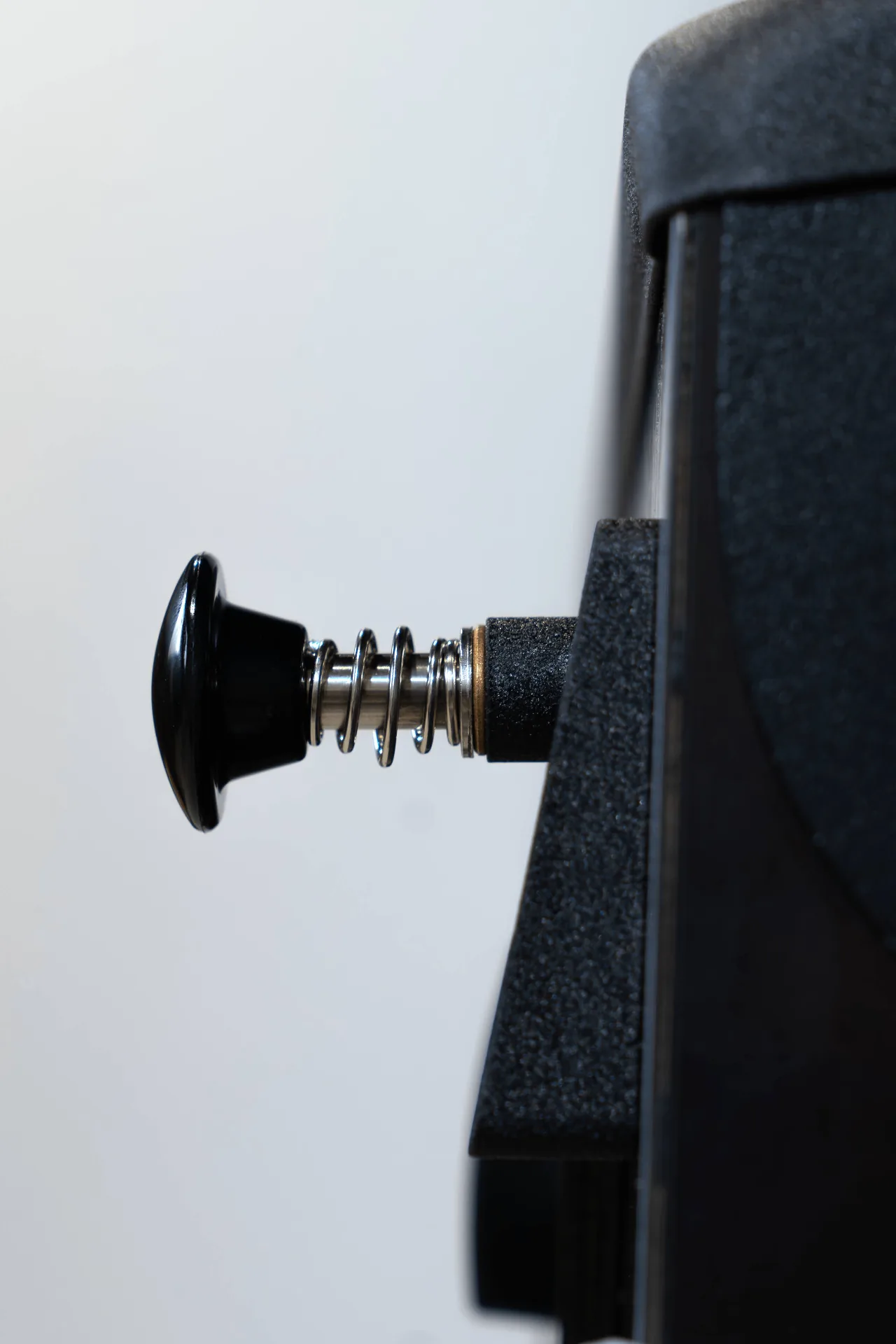
In the backbox, a second screen or dot-matrix display shows scores and animations. The most complete machines add what you feel in your hands: an accelerometer that detects nudges to the cabinet, an analogue plunger that controls shot strength and transducers that vibrate the cabinet with every bumper hit. Two software worlds coexist: Visual Pinball X, free and developed by enthusiasts, and Pinball FX from publisher Zen Studios, offering officially licensed tables. Our article on what a pincab is explains the details.
Virtual vs mechanical pinball: what really changes
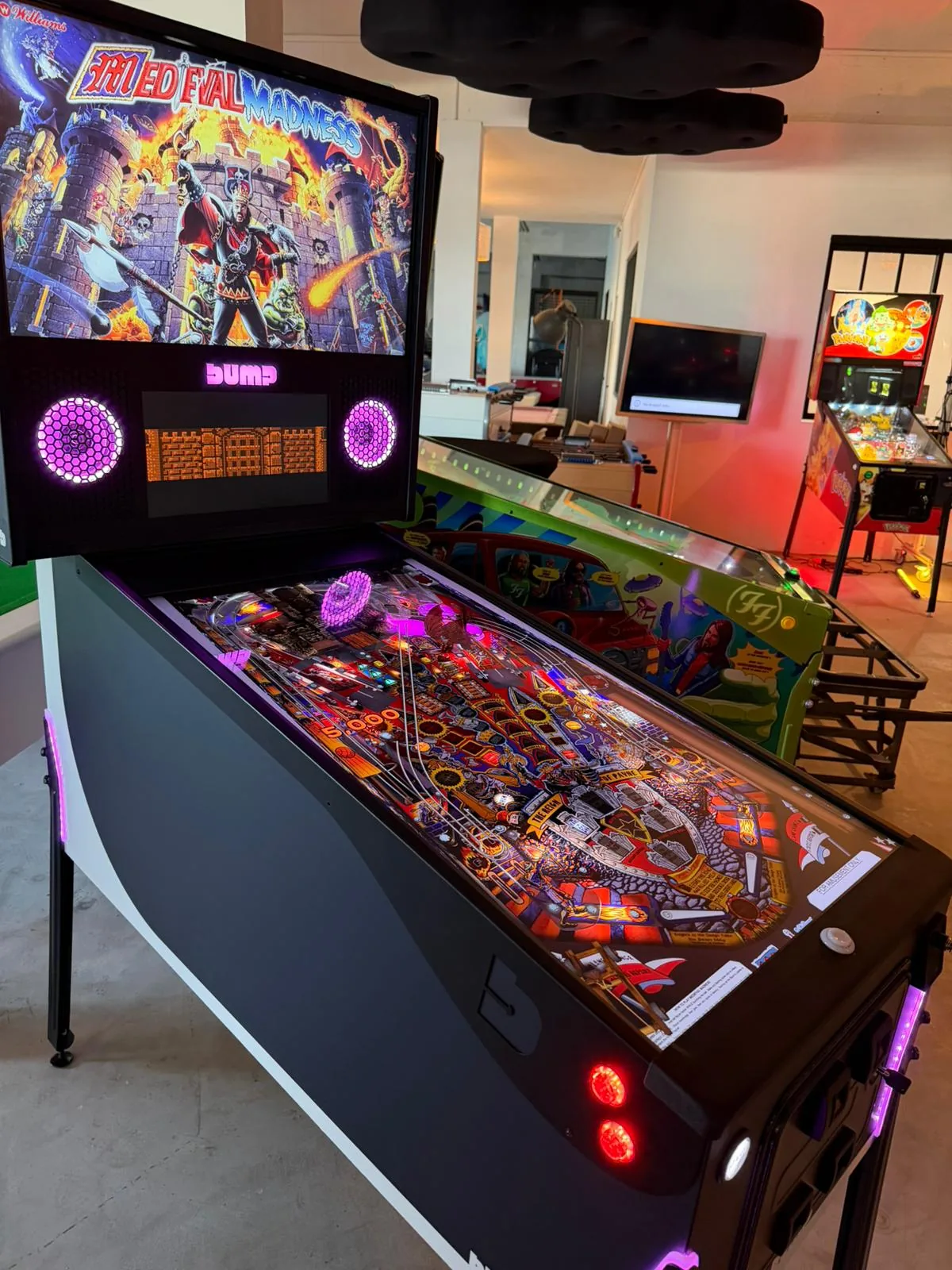
The difference fits in one sentence: mechanical pinball rolls a real steel ball on a real playfield; virtual pinball calculates it. Everything else follows from that. Here are the seven criteria that matter when you are deciding.
| Criterion | Mechanical pinball | Virtual pinball |
|---|---|---|
| The ball | a real steel ball, with its weight and unpredictable behaviour | a calculated ball, as convincing as the software and screen |
| Nudging | you nudge the cabinet and the ball reacts physically | an accelerometer translates the nudge, on machines equipped with one |
| Number of tables | one table per machine | dozens of tables on the same machine, depending on the software |
| Noise | coils, bumpers and ball: volume you cannot turn down | volume you can adjust like a speaker |
| Upkeep | wearing parts to replace: rubbers, flippers, coils | no playfield wearing out, but a computer that ages |
| Space | around 1.45 m long, 0.74 m wide, 1.93 m high and 115 to 135 kg for a Stern | from a compact machine to a full-size pinball cabinet, depending on screen size |
| New price | €8,090 to €14,590 including VAT for a Stern in France | from around €900 for an imported machine to €9,990 including VAT for the Bump Pro |
Quick verdict. Mechanical pinball wins on the ball, and that is not up for debate: nothing replaces steel if you want the raw sensation. Virtual pinball wins on variety, noise and upkeep. For nudging and feel, it all depends on the machine: a pincab without an accelerometer or vibrations feels like a video game played standing up. A well-equipped simulator is played with your body, just like pinball.
How much a virtual pinball machine costs in 2026
The term covers very different machines, from a game installed on a computer to a hand-assembled cabinet. Here are the observed prices. Euro prices reflect the French market.
| Type | Observed price | What you get |
|---|---|---|
| Pinball game on PC or console | €5 to €15 per table | official tables on your screen, played with a controller |
| Imported multi-game machine | around €900 to €1,800 | hundreds of preinstalled games, screens from 18.5 to 32 inches, licences to check |
| Consumer machine | $1,599.99 to $1,699.99 in the US; around €1,500 to €2,000 in France | a compact simulator, 32-inch screen, publisher's catalogue |
| Used pincab | €700 to €8,000, median €3,000 | a screen and PC with miles on them, worth checking closely |
| DIY pincab | €1,200 to €4,000 in parts | a custom machine, assembly hours not counted |
| Premium simulator | €9,990 including VAT for the Bump Pro | 43-inch 4K OLED, RTX 5070, hand-assembled in France, 2-year warranty |
| For comparison: new mechanical pinball | €8,090 to €14,590 including VAT from Stern in France | one table, a real ball |
Sources: the Pinball FX shop for table prices, checked on 10 November 2026; Google Shopping France on 23 November 2026 for imported multi-game machines, sometimes excluding tax and shipping; AtGames for the Legends Pinball 4KP, regular and promotional prices checked on 23 November 2026, excluding shipping and tax, plus Amazon.fr and French comparison sites for its price in France; our survey of 17 used pincab listings from 12 October 2026; Monte ton Cab for DIY pincabs; Avranches Automatic, Stern's official distributor in France, for new mechanical machines. Our article on pinball prices in 2026 breaks it down by family.
Two takeaways. First: a machine sold with hundreds of games for under €2,000 raises a simple question. Where do the tables come from? An official table is published with the rights holders' permission and behaves consistently from game to game. Ask before buying. Second: at €9,990, a premium simulator costs as much as a new Stern, between the Pro and Premium versions. The question is no longer budget, but how you want to play: one perfect table, or 140 tables available under the same glass.
Lifespan and upkeep: the real question about the PC
The objection keeps coming up in our messages: virtual pinball is a computer, so it will be outdated in five years. It is right about one thing: a virtual pinball machine ages like a computer, not like furniture. Mechanical pinball ages like a machine: its wearing parts can be replaced. At Stern's official French distributor, a pair of flippers starts at €150 including VAT.
So the right question is not how long it lasts, but who repairs it and on what terms. A used pincab bought from a private seller generally has no commercial warranty; the French legal protection against hidden defects still applies. For a new machine, read the warranty. The Bump Pro's covers parts and labour for 2 years, including the computer and screens, with remote diagnosis as the first step. Before buying used, follow our used pincab checklist.
Which should you choose?
- You dream of a specific table and enjoy opening the machine: mechanical pinball. Nothing replaces the steel ball.
- You want table variety, family play and adjustable volume: virtual pinball, provided it has a real plunger, a nudge sensor and a large screen.
- Your budget is small and you enjoy tinkering: a used or DIY pincab, accepting that you are your own after-sales service.
- Still unsure? Play both before choosing.
Our article on video games, simulators and machines compares every way to play.
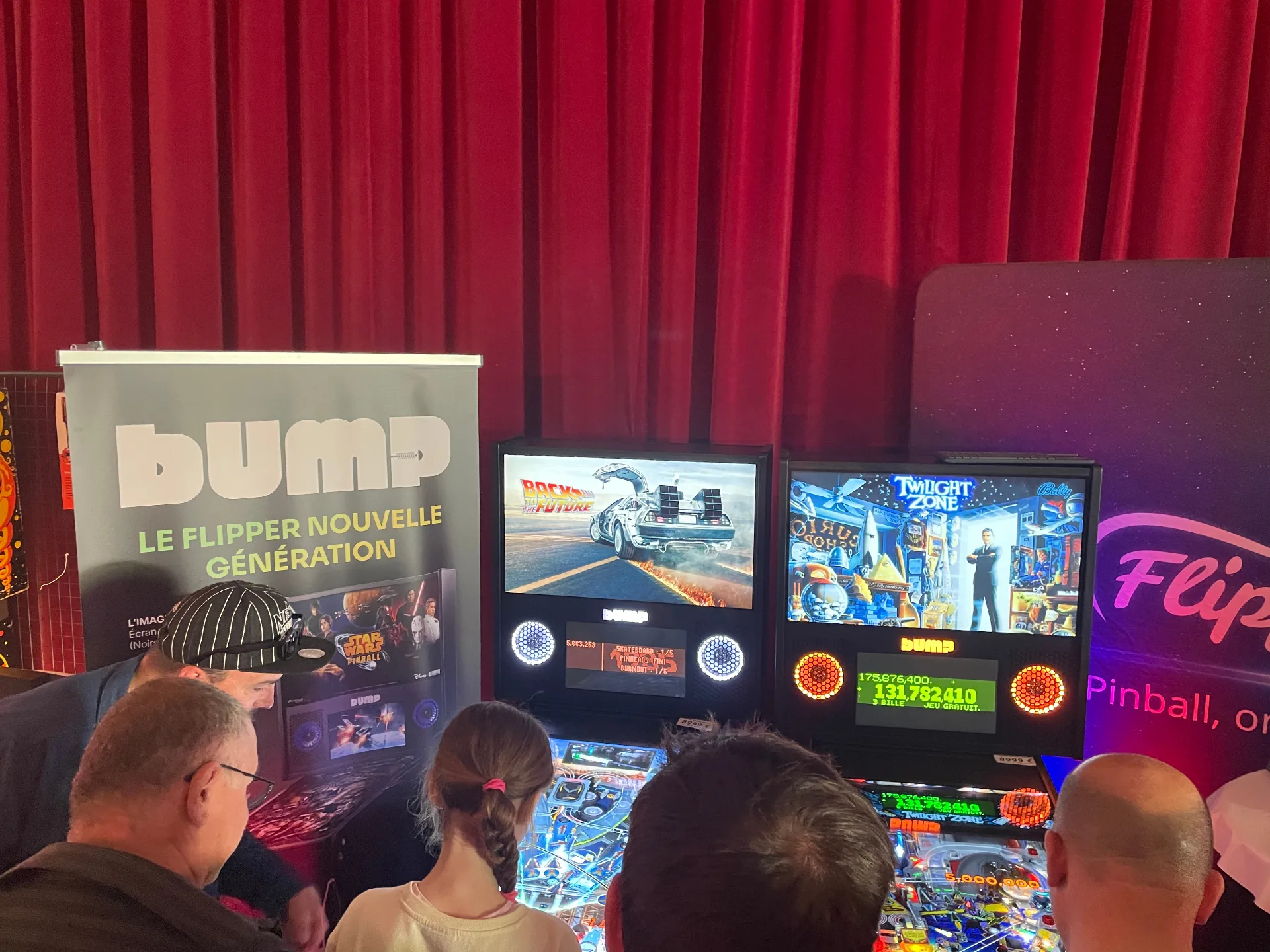
Our position: do not pick a side. Virtual pinball does not replace pinball; it makes it bigger. That is why at Bump we make a simulator, the Bump Pro, and are also building a 100% mechanical pinball machine, the Bump #001.
The Bump Pro is our idea of virtual pinball without compromise: a 43-inch 4K OLED panel, RTX 5070, accelerometer nudging, analogue plunger, 4 exciters and 2 bass shakers to feel every bumper, hand-assembled in France. 140 official tables available, chosen and bought individually, between €5 and €15 per table, with €100 of tables on us to start your catalogue. See our Pinball FX table catalogue for details. Price: €9,990 including VAT. For a bar, hotel or company, long-term rental is available to professionals only, at €299 excluding VAT per month.
FAQ
What is a virtual pinball machine?
A pinball cabinet with its playfield displayed on a screen laid flat. A computer calculates the ball, while real buttons and a real plunger let you play. It is also called digital pinball, a pincab or a simulator.
Are virtual pinball and pincab the same thing?
Yes. Pincab comes from pinball cabinet, the physical cabinet. A pinball game on a computer or console is sometimes called virtual pinball too, but you play it on your screen, without a cabinet.
How much does a virtual pinball machine cost?
From €700 for an entry-level used pincab to €9,990 including VAT for a premium simulator such as the Bump Pro. Allow around €900 to €1,800 for an imported multi-game machine and €1,500 to €2,000 in France for a consumer machine. On PC or console, a table costs €5 to €15.
Does virtual pinball feel the same as real pinball?
Not exactly: the steel ball in a mechanical machine cannot be simulated perfectly. But a simulator with an accelerometer, analogue plunger and transducers is played with your body, just like pinball. Without that equipment, it feels more like a video game.
Can you nudge a virtual pinball machine?
Yes, if it has a nudge sensor. On the Bump Pro, an accelerometer detects when you nudge the cabinet and the ball reacts. Nudge too hard and you risk a tilt, just like on a mechanical machine.
Will a virtual pinball machine be outdated in five years?
It ages like a computer. The real question is who repairs it and on what terms: the Bump Pro has a 2-year parts and labour warranty, including the computer and screens. A used pincab sold by a private seller generally has no commercial warranty.
Should you buy a used virtual pinball machine?
It is the cheapest way in: €700 to €8,000 in our survey of 17 listings, with a €3,000 median. Test the machine in person, ask for the original invoice and check the screen and graphics card. Our checklist covers the 12 points to inspect.
Where can you try virtual pinball before buying?
At a dealer or a venue equipped with a machine. For the Bump Pro, our Try page shows demonstration points near you.
In short
Virtual pinball calculates the ball instead of rolling it. It loses on raw sensation, wins on variety, noise and upkeep, and costs from €700 used to €9,990 including VAT at the premium end in France. Check the screen, plunger, nudge sensor and warranty. And play before buying.
The best way to compare is to play. Try a Bump