Buying guide —
Digital pinball: too expensive, not a real pinball machine? We read your 162 comments
Is digital pinball worth it? Yes, if you want to play dozens of official tables on a single machine, with no mechanics to maintain. No, if you're after the exact feel of a real steel ball on one table: for the same budget, a second-hand mechanical machine will do better on that point. In between, it all comes down to what you expect from the machine.
In September 2026, César, from the RB Flip France x Vintage Legends channel, welcomed Tom, founder of BUMP, for a hands-on session with the Bump Pro. The video passed 90,000 views and 162 comments. Some loved it. Plenty grumbled. We read everything. Rather than reply one by one under the video, we gathered the criticisms that come up most and answer them here, no spin, the way we would if you were standing in front of the machine. Along the way, it's also the best way to understand what digital pinball really is today.
The video

What you told us
Across the first 100 comments we went through, here's what keeps coming up. One comment can touch on several topics.
| Criticism | Comments | Our answer in one line |
|---|---|---|
| The price | about 30 out of 100 | It's justified by lifespan, not by a parts list |
| Pinball FX vs Visual Pinball (VPX) | about 14 | Two philosophies, we chose official tables |
| It's not a real pinball machine | about 13 | True for the real ball, wrong for the rest |
| The image is flat | about 7 | A screen is still a screen, we picked the best |
| Latency, nudge and tilt | about 7 | Measured against a real pinball machine |
| Tables cost extra | 4, one of them backed by 23 people | Yes, with €100 on us to get started |
| Pure enthusiasm | about 25 | Thanks, that feels good too |
“€10,000? That's too expensive”
“Looks fun, but what puts me off personally is the price…”
It's the most upvoted comment on the video, and it's fair. The Bump Pro costs €9,990 incl. VAT. That's real money. The real question is: expensive compared to what?
| Option | Indicative price | What you get |
|---|---|---|
| Entry-level pincab | from about €2,000 | a way in, consumer-grade finish and screen |
| DIY pincab | about €2,000 in parts according to one commenter, time not counted | a made-to-measure machine, if you like tinkering |
| New mechanical pinball | from about €8,400 incl. VAT | one table, a real ball |
| Bump Pro | €9,990 incl. VAT | 4K OLED panel, RTX 5070 graphics card, two bass shakers and a subwoofer, hand-assembled in France, 140 official tables available, chosen and bought individually, with €100 of tables on us to start your catalogue |
If €10,000 makes no sense for you, we completely get it, and an entry-level or DIY pincab is a great way to start. The Bump is for people who want a finished, tuned, durable machine that looks good in a living room. Another comment puts it better than we could: “The hardware inside alone justifies a good chunk of the price.” For every price benchmark on the market, see what a pinball machine really costs.
“You have to buy the tables on top”
“You've got to buy the tables on top of that crazy price!”
Yes. And it's a deliberate choice. The 140 tables are the official catalogue available from Zen Studios, not a bundle included with the machine. Each table is bought individually, between €2 and €10. To get you started, we give you €100 of tables, enough to pick roughly 30 to 40 depending on their price.
Why? Because nobody discovers 140 tables at once: it takes years to get through them. You build your catalogue as you go, table by table, and it's yours. Even at the top price, €10 a table, all 140 would come to €1,400. Every one is an official, licensed table, bought by the machine's owner. To see what's out there, browse the catalogue of available tables.
“It's not a real pinball machine”
“OK, just one table, but the feel is simply incomparable.”
On one point, you're right: a real steel ball, its weight, its unpredictable bounces, no screen reproduces them exactly. If you dream of one specific table and you like opening up the machine, get a mechanical pinball. Seriously.
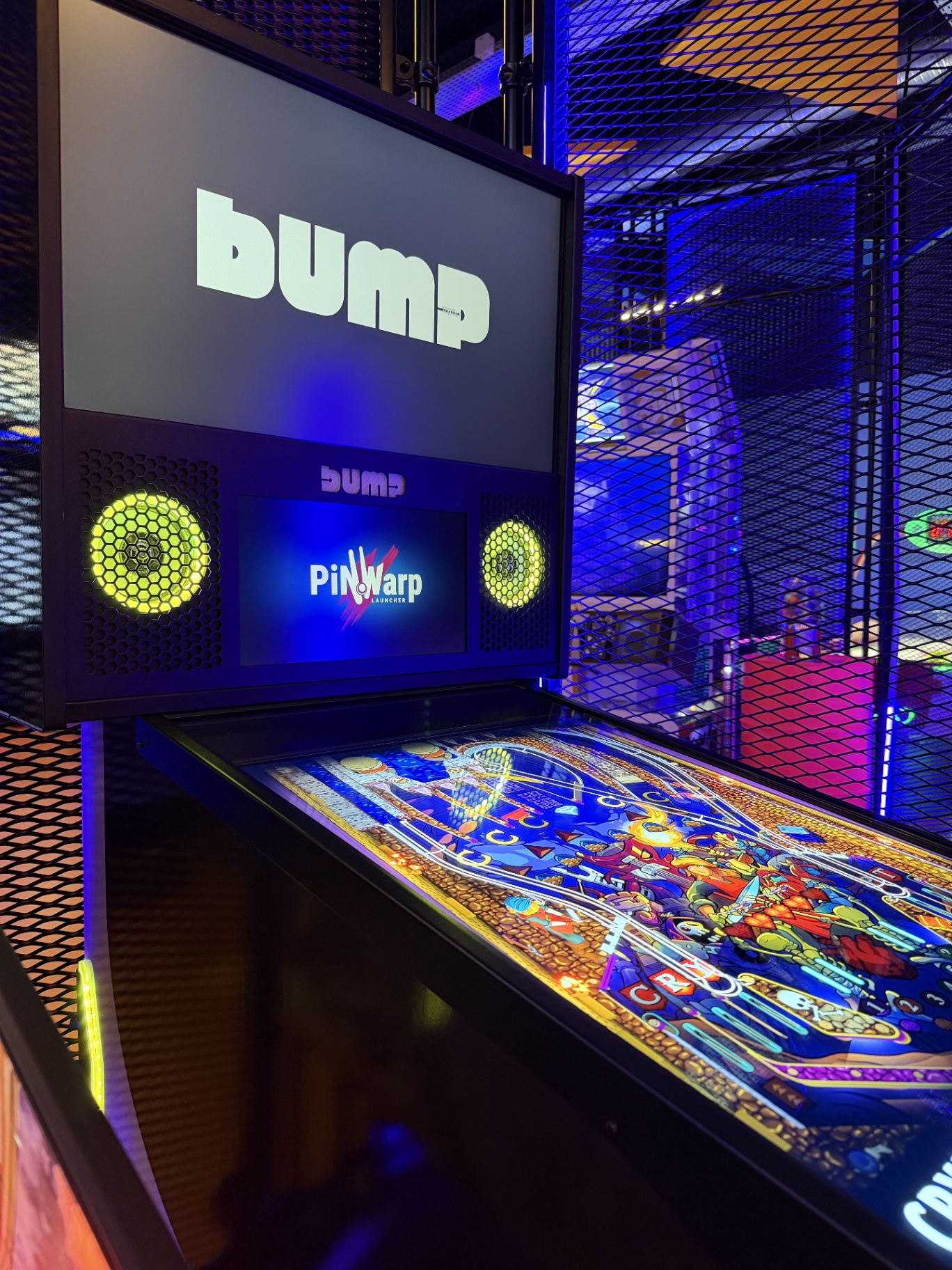
On the rest, it's less clear-cut. Digital pinball keeps what makes the game: the tilted playfield, the flippers, the plunger, the tilt. The Bump adds two bass shakers and a subwoofer so you feel the hits in the cabinet, not just on screen. And it opens up dozens of tables in a single machine, with no rubbers to change or coils to adjust.
We don't pick a side: we also build a 100% mechanical pinball, Bump #001. Both are pinball, and the game is anything but retro, as we explain in our complete pinball guide. For a point-by-point comparison, see our mechanical vs virtual comparison.
“Pinball FX isn't VPX”
“Is VPX taboo or what?”
No. Visual Pinball X is free, open-source software, driven by an impressive community, and plenty of enthusiasts prefer its physics. We have deep respect for it.
We chose to work with Zen Studios, for three reasons. Consistency: one environment, the same interface and the same settings from one table to the next. Uniform quality: every table in the catalogue has the same level of finish and the same long-term support. Respect for rights: these are official, licensed tables, including the great Williams and Bally classics. When you sell a turnkey machine, that's what you owe your customers and the rights holders.
As for physics, it's mostly a matter of taste. The best way to settle it is to come and play.
“An RTX 5070 for a pinball machine? That's €10,000 AliExpress”
“Do you really need an RTX 5070 for pinball?”
Two reasons. The first is latency: we want it flawless, every game, on every table. The second is lifespan: more demanding tables, in 3D or otherwise, will come out in the years ahead, and the machine still has to run them perfectly five years from now. A more modest card runs today's tables. It won't necessarily handle tomorrow's.
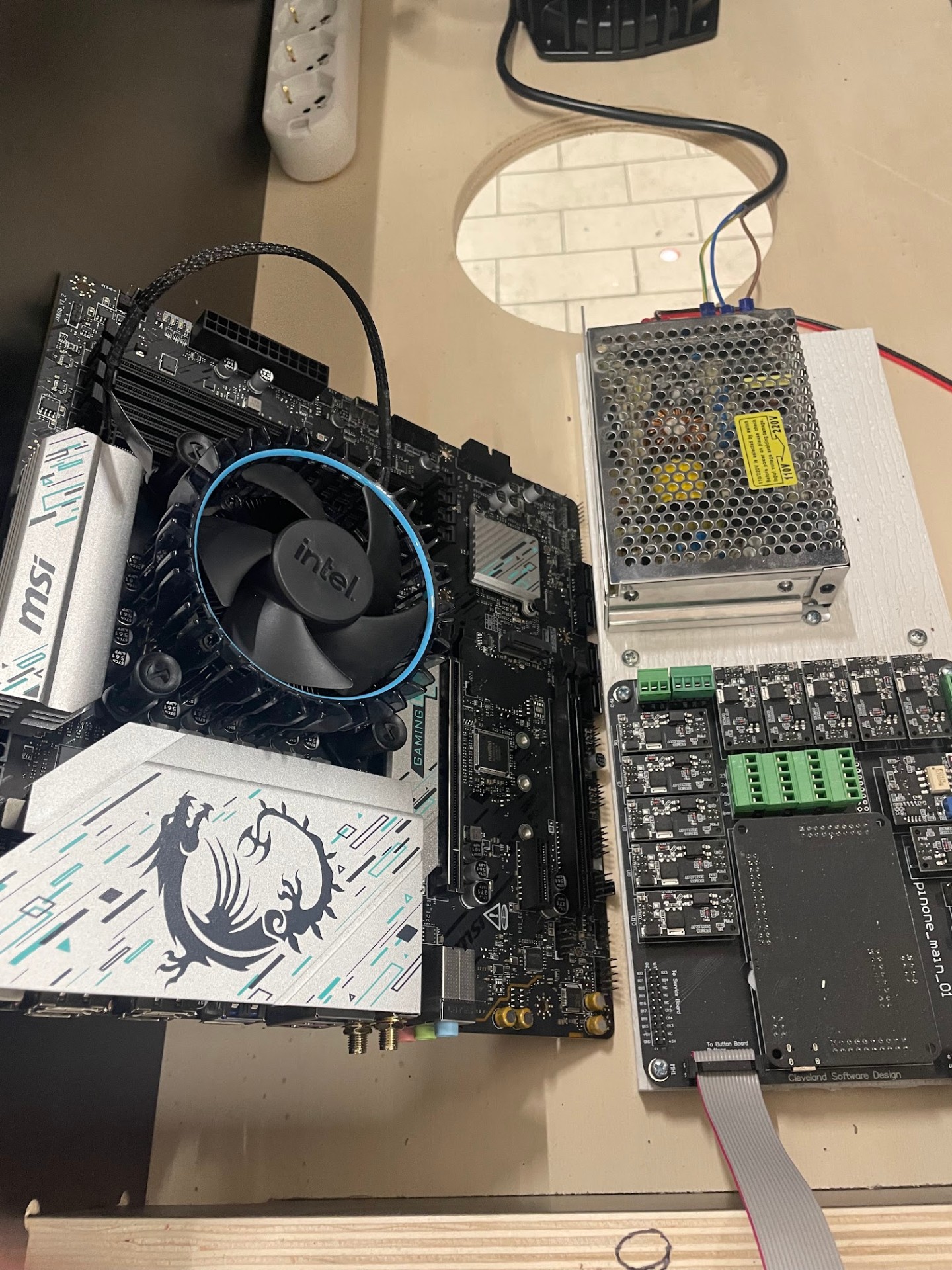
That's the whole difference with a product bought at the lowest price online: you don't see it on a spec sheet, you see it after five years. The Bump is hand-assembled in France, built to last.
“The image is flat, there's no depth”
“You don't get the feel of a real pinball, it's a flattened image.”
It's the most technically honest criticism, and we won't pretend otherwise: a screen is still a screen. The depth of a real playfield, with its raised ramps, can't be fully reproduced in an image. What we did was pick the best image possible: a 4K OLED panel, for deep blacks and contrast an LCD screen can't deliver. The rest is for your eyes to judge, in person rather than on video.
“What about latency, nudge and tilt?”
“The pincabs I'd seen before had a latency problem. This one stands out for how responsive it is.”
Latency is the first thing we tune. We measure it in direct comparison with a mechanical pinball machine, where the electrical signal is almost instantaneous, and player feedback is almost unanimously excellent.
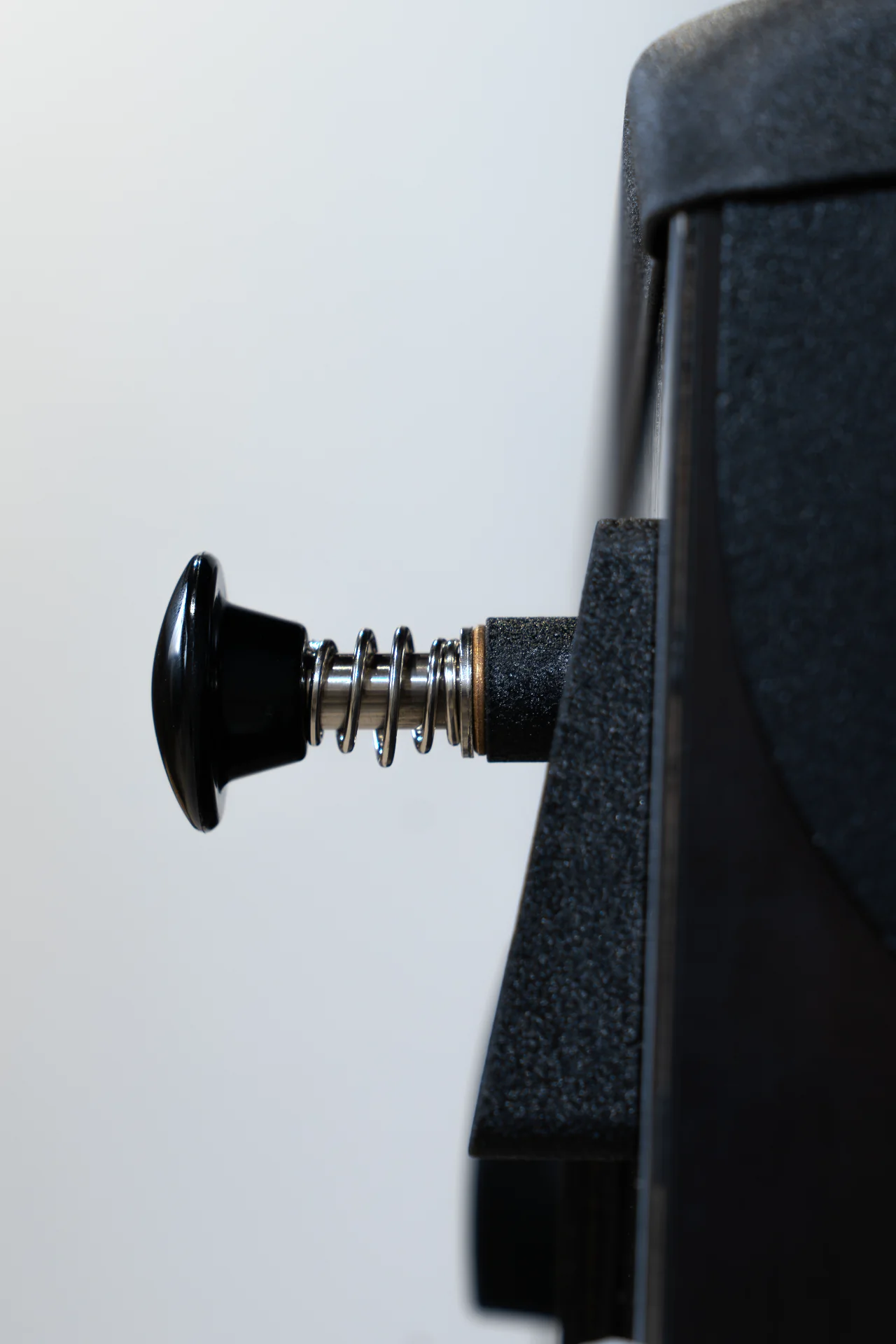
Nudge and tilt work just like on a real pinball machine: you can shake the cabinet to save a ball, and the tilt kicks in if you overdo it. The machine is set up at the factory, and tilt sensitivity is adjusted on delivery to suit the way you play.
The other technical questions
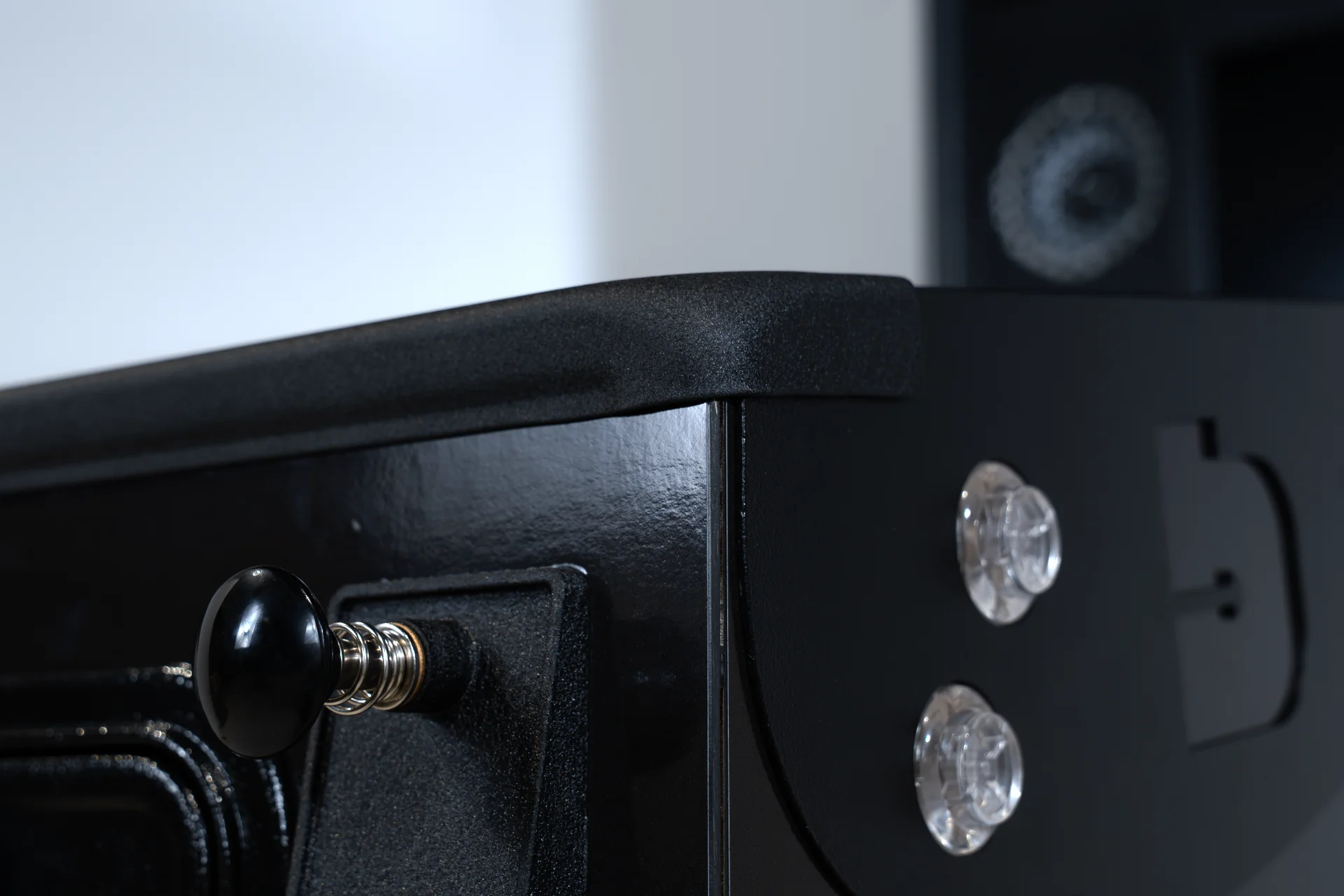
Is the screen protected? Yes, by a standard pinball glass, the same as the ones used on Stern machines and other manufacturers'. It's locked in by a standard lockbar, with two latches inside.
Do you see Windows booting? No. The machine starts straight into the game.
And the physical feel? Two bass shakers and a subwoofer deliver the hits and vibrations through the cabinet.
“Are we not allowed to say pincab?”
“Is saying pincab forbidden now? What did they actually invent?”
Not at all, and we're happy to say it: the Bump is a pincab. We also call it a simulator, because that's exactly what it does, simulate pinball as closely as possible. What we created isn't the category, it's our machine: its finish, its tuning, its assembly in France. For the full definition, see what is a pincab.
What we take away
The fairest criticism is the price, and it pushes us to explain better what's inside it. The most interesting is image depth, because it pushes the whole category forward. And the most common one, deep down, is “you have to see it for real”. We agree.
Pinball is hard to explain and instantly understood. The best thing is to come and play, or to read our complete pinball guide first. Try it, and tell us what you think.
FAQ
Is digital pinball worth it?
Yes if you want dozens of official tables in a single machine, with no mechanical maintenance. No if you're after the exact feel of a real ball on one table: a second-hand mechanical pinball will do better on that point for a comparable budget.
How much does digital pinball cost?
From a few thousand euros for an entry-level or DIY model, to about €10,000 for a premium model. The Bump Pro costs €9,990 incl. VAT, with €100 of tables on us to start your catalogue. Long-term lease reserved for professionals: €299 excl. VAT per month.
Are tables included in the price of a digital pinball machine?
It depends on the machine. On the Bump, no: the official Zen Studios catalogue has 140 tables, chosen and bought individually, between €2 and €10 each. To get started, €100 of tables are on us, roughly 30 to 40 tables. Each owner builds their own catalogue, which belongs to them.
Pinball FX or Visual Pinball: what's the difference?
Visual Pinball X is free, open-source software, much loved by enthusiasts for its physics. Pinball FX, by Zen Studios, offers official licensed tables, including Williams and Bally classics. On the Bump, we chose Pinball FX for a consistent catalogue, uniform quality from one table to the next, and respect for rights.
Does digital pinball have latency?
A well-designed digital pinball has imperceptible latency. On the Bump, it's measured in direct comparison with a mechanical pinball machine, and it's the first setting we take care of.
Can you nudge a digital pinball machine?
Yes. Nudging lets you shake the machine to save a ball, and the tilt kicks in if you overdo it. On the Bump, it's set up at the factory and tilt sensitivity is adjusted on delivery.
Is a digital pinball screen fragile?
On the Bump, the screen is protected by a standard pinball glass, just like on mechanical machines, locked in by a standard two-latch lockbar.
Why does a premium pincab cost more than a gaming PC?
Because you're not just paying for components: the cabinet, the 4K OLED panel, physical feedback through bass shakers, the tuning and hand assembly make the difference. And the graphics card is chosen to run the tables of the years ahead, not just today's.